Tuesday, March 27, 2007

Quickies

Things are way too busy at work. But there’s always time for some good reading.

Here are some you should all check out:
Medved: The Essence of Liberalism: Embracing Life's Losers
MR: The Credit Snobs

Also check this Gallup poll about the "most important problem" facing the US. Of course the focus is on the huge preoccupation with Iraq… But what I think it’s really amazing is that table that shows “Issues Previously Mentioned by 10% of Americans or More (Jan. 2001 to present) “

1% of people worry about crime (from 10% in Oct. 2002)
Another 1% of people worry about energy (from 12% in May. 2001)

Most surprising of all, only 5% worry about terrorism (from 46% in Oct. 2001)

I don’t want to sound callous, but it seems to me that Iraq’s importance is completely inflated and out of proportion…

Thursday, March 22, 2007

The Cowboy and The Breck Girl


Dedicated to Anna :-)

Tuesday, March 20, 2007

Polls Together, Polls Apart

Look at these two recent polls:

USA Today and CNN:
Most Iraqis live in fear of violence 4 years after invasion

The Sunday Times:
Resilient Iraqis ask what civil war?

The differences are striking. The USA Today poll focus strictly on bad news (it never mentions that a majority still thinks that life today is better than under Saddam). The Sunday Times is much fairer, even though it could have been more direct.

Which one do you think will get more exposure?

According to a BBC poll, it is easy to guess:

- 60% believed the US and UK were not right to invade Iraq exactly four years ago.
- In contrast, 57% of people would back British military action overseas if it was to assist disaster relief or stop genocide.

Do these people think the Iraqis did not need relief? Or do they think Saddam was not a genocidal dictator?

If even with the current mess in Iraq 49% of Iraqis still think life now is better than before, can you imagine how bad life was before?

Or maybe they think that there is a magic way to remove these guys from power! Every single time I hear people calling for something to be done in Darfur, I imagine what exactly they think would happen. Would R.E.M. be ok with invading Sudan? Would they ask for a timeline? How many US soldiers would we be willing to have killed? Do they remember at all what Mogadishu was about?

Am I really asking for too much here?

Monday, March 19, 2007

How many zeros are in a loser?

Venezuela is knocking three zeros off the bolivar, its currency, and renaming it the "bolivar fuerte" (strong bolivar).

Agora vai.

Saturday, March 17, 2007

Talking about bias

This editorial from Robert Kagan is just outstanding. That first paragraph is an instant classic.

"The 'Surge' Is Succeeding

By Robert Kagan
Sunday, March 11, 2007; Page B07

A front-page story in The Post last week suggested that the Bush administration has no backup plan in case the surge in Iraq doesn't work. I wonder if The Post and other newspapers have a backup plan in case it does.

Leading journalists have been reporting for some time that the war was hopeless, a fiasco that could not be salvaged by more troops and a new counterinsurgency strategy. The conventional wisdom in December held that sending more troops was politically impossible after the antiwar tenor of the midterm elections. It was practically impossible because the extra troops didn't exist. Even if the troops did exist, they could not make a difference.


Four months later, the once insurmountable political opposition has been surmounted. The nonexistent troops are flowing into Iraq. And though it is still early and horrible acts of violence continue, there is substantial evidence that the new counterinsurgency strategy, backed by the infusion of new forces, is having a significant effect.

Some observers are reporting the shift. Iraqi bloggers Mohammed and Omar Fadhil, widely respected for their straight talk, say that "early signs are encouraging." The first impact of the "surge," they write, was psychological. Both friends and foes in Iraq had been convinced, in no small part by the American media, that the United States was preparing to pull out. When the opposite occurred, this alone shifted the dynamic.

As the Fadhils report, "Commanders and lieutenants of various militant groups abandoned their positions in Baghdad and in some cases fled the country." The most prominent leader to go into hiding has been Moqtada al-Sadr. His Mahdi Army has been instructed to avoid clashes with American and Iraqi forces, even as coalition forces begin to establish themselves in the once off-limits Sadr City.

Before the arrival of Gen. David Petraeus, the Army's leading counterinsurgency strategist, U.S. forces tended to raid insurgent and terrorist strongholds and then pull back and hand over the areas to Iraqi forces, who failed to hold them. The Fadhils report, "One difference between this and earlier -- failed -- attempts to secure Baghdad is the willingness of the Iraqi and U.S. governments to commit enough resources for enough time to make it work." In the past, bursts of American activity were followed by withdrawal and a return of the insurgents. Now, the plan to secure Baghdad "is becoming stricter and gaining momentum by the day as more troops pour into the city, allowing for a better implementation of the 'clear and hold' strategy." Baghdadis "always want the 'hold' part to materialize, and feel safe when they go out and find the Army and police maintaining their posts -- the bad guys can't intimidate as long as the troops are staying."

A greater sense of confidence produces many benefits. The number of security tips about insurgents that Iraqi civilians provide has jumped sharply. Stores and marketplaces are reopening in Baghdad, increasing the sense of community. People dislocated by sectarian violence are returning to their homes. As a result, "many Baghdadis feel hopeful again about the future, and the fear of civil war is slowly being replaced by optimism that peace might one day return to this city," the Fadhils report. "This change in mood is something huge by itself."

Apparently some American journalists see the difference. NBC's Brian Williams recently reported a dramatic change in Ramadi since his previous visit. The city was safer; the airport more secure. The new American strategy of "getting out, decentralizing, going into the neighborhoods, grabbing a toehold, telling the enemy we're here, start talking to the locals -- that is having an obvious and palpable effect." U.S. soldiers forged agreements with local religious leaders and pushed al-Qaeda back -- a trend other observers have noted in some Sunni-dominated areas. The result, Williams said, is that "the war has changed."

It is no coincidence that as the mood and the reality have shifted, political currents have shifted as well. A national agreement on sharing oil revenue appears on its way to approval. The Interior Ministry has been purged of corrupt officials and of many suspected of torture and brutality. And cracks are appearing in the Shiite governing coalition -- a good sign, given that the rock-solid unity was both the product and cause of growing sectarian violence.

There is still violence, as Sunni insurgents and al-Qaeda seek to prove that the surge is not working. However, they are striking at more vulnerable targets in the provinces. Violence is down in Baghdad. As for Sadr and the Mahdi Army, it is possible they may reemerge as a problem later. But trying to wait out the American and Iraqi effort may be hazardous if the public becomes less tolerant of their violence. It could not be comforting to Sadr or al-Qaeda to read in the New York Times that the United States plans to keep higher force levels in Iraq through at least the beginning of 2008. The only good news for them would be if the Bush administration in its infinite wisdom starts to talk again about drawing down forces.

No one is asking American journalists to start emphasizing the "good" news. All they have to do is report what is occurring, though it may conflict with their previous judgments. Some are still selling books based on the premise that the war is lost, end of story. But what if there is a new chapter in the story?"


Robert Kagan, a senior associate at the Carnegie Endowment for International Peace and transatlantic fellow at the German Marshall Fund, writes a monthly column for The Post. His latest book is "Dangerous Nation," a history of American foreign policy.

Thursday, March 15, 2007

The different types of bias

This latest brouhaha between me and Mr. Hermesmart made me think about a subject I don’t think I wrote about before: the difference between personal bias and news bias.

First of all, I don't think personal bias is something one should be ashamed of. I believe everyone without exception has some kind of bias about any possible subject. Even (maybe especially) about the ones they know absolutely nothing about.

Taking personal beliefs and experiences into account when analyzing an issue is not bad. It’s part of our freedom of choice and speech. It is also a way to bring discussions to a more realistic way. Using stone cold logic in every aspect of your life is just impractical.

It probably comes down to a matter of degree. If your biases don’t prevent you from at least considering the chance that you are wrong, you are probably ok.

The situation is completely different with press bias. More specifically, with news reporting bias.

News reporting is not (or should not be) subject to personal interference. In many ways, I think of the news as an exact science: it is based on hard facts. Reporters describe what they saw or heard. There is no middle ground here. Either something is there or is not. Your contribution to the job is to be precise and eloquent so others can understand exactly what has happened. That is it.

What people do with the news is completely out of scope. Some ignore it, some write editorials about it, it really shouldn’t matter to an honest reporter.

Nowadays, the news media in the US and around the world is a disgrace (with very few exceptions). And I don't say that recklessly. I really believe that it is one of the worst aspects of our current society. It somehow got morphed into this “social animal" that tries to mold reality to fit into their vision of what the world should be.

I am not the only one to think that. This recent Zogby poll shows that 83% of American voters believe that the media is biased in one direction or another, while just 11% believe the media doesn’t take political sides. Nearly two-thirds of those who detected bias in the media (64%) said the media leans left, while slightly more than a quarter of respondents (28%) said they see a conservative bias on their TV sets and in their column inches.

This creates all kinds of problems. First, it skews public choice based on the preferences of a few. Second, it makes people biased without them really knowing about it: they based their opinions in distorted facts.

Third, and worst of all, it makes people behave in more extreme ways. For instance, I spend a lot of time “defending” President Bush just because there is so much crap going around about him that I just can’t stand it. That in turn gives the wrong impression that I am a huge fan of his, because I have no time (or motivation) to write about the things I believe he is doing wrong.

It is a vicious cycle all around. And that is why I honestly hate the news press so much, and that is why I think it is the most dishonest and damaging institution in the US currently.

Flip-flop

Ok, so let’s try this again. Comments are back.

Sunday, March 11, 2007

Rageh Inside Iran

Full video here.

More info here.

Friday, March 09, 2007

Where would you rather be?

Desde 1º de Fevereiro de 2007:

Rio Body Count
Mortos: 323
Feridos: 194

Iraq Coalition Casualties
Mortos: 111
Feridos: 285

Mass stupidity (updated)

I was looking at the pictures from these protesters in Brazil today and I honestly thought to myself: What in the world are they trying to say?

Please, let’s start by being honest here. Brazilians don’t give a damn about Iraqis or Afghans. They care even less whether Bush is doing a good job governing the US or not.

So, is this still the anti-capitalist dinosaurs and their childish fantasies? Or is it people that are so disillusioned with their country that they have to blame foreigners for their situation?

Having lived in Brazil for so long, and now being here in the US for almost 10 years, this whole thing makes me nauseous.

I mean, you have an official representative (governor of Maranhão) participating in a mock hanging of Bush! How much more ridiculous and pathetic can you possibly get?

Brazilians, of course, are not alone in this delusion.

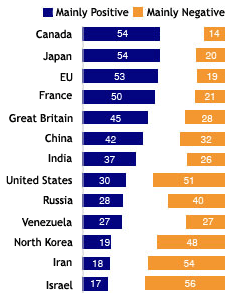
These are the results of a recent poll that measured views of countries' influence:


I ask myself: Who in their right mind think that a tiny puny democratic country like Israel, who is just fighting against people who openly say that they want to annihilate them, can be the most hated country in the world?

Is the parameter here violence? Where is the Sudan?

Are we talking about fear of imperialism? How about China who actually IS occupying countries against their will?

What the hell is Canada doing for the world???

I have to admit that this kind of mass stupidity is one of the most depressing aspects of our world today.

UPDATE:
Clovis Rossi says that he would ask Bush about Guantanamo and other accusations from Human Rights Watch. Would that make him feel better about the violence in Brazil? Or all he is trying to do is to criticize the American government so they stop criticizing the Brazilian government? What a great strategy.

Lula however, decided to focus his complaints on subsidies. Agricultural subsidies on the American side, that is. It would be great if Bush would propose to open the ethanol imports if Brazil would remove the barriers for, oh, let’s say automobiles (currently at 35% plus every other tax on manufactured products).

But the really interesting part is that the US runs a considerable trade deficit with Brazil ($6.7 billion in 2003). Also, US-Brazil trade grew 195% from 1987 to 2004. The United States is Brazil’s largest single-country trading partner. Yes, much more could be done, but the fact is that there is a lot of money flowing from the evil American hands to the oppressed Brazilian people.

So how come all these angry protesters on the streets are telling the US to go away? Could it be because Brazil’s economy is under developed and all this money from trade is going to a few fat farmers and not the rest of the country?

Do people really expect that the US can fix this? I thought the consensus was that the US should stay away from internal problems of other countries…

Am I asking for too much here?

Thursday, March 08, 2007

Drug use on decline

Two good news:

- Workplace drug use hits lowest on record
- Poll: Youth alcohol, drug use on decline

So, is the "war on drugs" working?

Back in LALA land, it looks like the medical marijuana boongoggle is falling apart.

Wednesday, March 07, 2007

Pro Bono?

Advertising Age reports that around $100 million has been spent on the Red campaign blanketing billboards and magazines with images of Bono and other "celebrities", while the total sum raised for Africa is $18 million.

Just to be clear...

Total spent on making Bono more famous = $100 million
Total spent on drugs for Africans = $18 million

(via MR)

Monday, March 05, 2007

564

Some people believe that abortion is just a tool.

Not just a population control tool. They believe it is a solution for various social issues: child abuse, crime, low literacy, and so on.

Apart from the obvious fallacy of this argument (which is equivalent to propose the murder of all poor people to end poverty), it is interesting to think about why these issues are not all solved by abortion, even in countries like the US where abortion is openly legal and accepted. They may be attenuated (maybe by the simple matter of having less people available to commit these crimes) but by no measure they go away.

Not even filicide is solved by abortion!

Now, this woman, without any big bucks from the government or any help from “humanist” activists, is saving lives. 564 lives that were being literally thrown in trash cans.

What should we learn from this? That if we build more clinics these women will stop behaving this way? Are we saying that these babies are doomed and the only question is whether they die inside or outside their mother’s wombs?

Why do we have to invest billions in prisons and social programs to criminals and not invest the same in orphanages? Why do death row in mates have the benefit of years and years of bureaucracy and unborn babies are just killed on demand? Why not increase the death penalty to free up some space and resources to these unborn babies? What should be easier: to adopt a baby or to kill it?

Are my proposals a little too barbaric to you?

What kind of life are we really choosing to protect here as a society?

Wednesday, February 28, 2007

Environmental hypocrisy

Differences between Bush’s Crawford Ranch and Al Gore’s Nashville home:

Bush’s one-story, eight-room, 4,000-square-foot ground-level house has 25,000 gallons of rainwater storage, gray water collection from sinks and showers for irrigation, passive solar, geothermal heating and cooling.

Gore’s 20-room home and pool house devoured nearly 221,000 kilowatt-hours in 2006, more than 20 times the national average of 10,656 kilowatt-hours. In total, Gore paid nearly $30,000 in combined electricity and natural gas bills for his Nashville estate in 2006.

Sunday, February 25, 2007

Another step towards dictatorship

So it looks like Venezuela continues its path towards dictatorship. No more editorials making jokes of Chávez.

Now here in the US, the country where civil liberties are being exterminated by Bush (also know as “The Devil”) the situation is a little different. Yesterday I watched the new George Lopez special on HBO, and among all the jokes about how the Mexicans actually own the US, George Lopez talked about a new acronym he invented specially for Bush: FTP. That is Fuck That Puto.

If what you want is newspaper's Bush bashing, you can check today’s Doonesbury, Pat Oliphant, Sargent and Tom Toles.

I am only talking about the NYT, of course.

More blacks in jail than in college?

I was cleaning up my old CDs today and found this (I know the lyrics are terrible but the music still rocks).

One of the songs says that “At this moment, there are more blacks in jail than in college”.

I thought that sounded odd, so I decided to Google it. Here is what I found:

There are more than twice as many blacks in college than in jail. Even more interesting, in the 16-44 age range, percent college enrollment for Blacks exceeds White non-Hispanics by 12.8% to 12.6%.

Ah, I also learned that Kerry used this same false argument in his 2004 campaign. Surprise, surprise.

Saturday, February 24, 2007

Is this really a matter of choice?


A life is a life

A life is a life. Whether you call her a baby or a lack of choice, it really doesn’t matter.

It’s hard to be a right-winger

Besides all the political stances that define an “American right-winger” (which are somewhat loose but basically consist of pro market/low taxes + strong military + some level of social conservatism) there are some personal characteristics that I see in common amongst all of us.

These personality traits are in many ways what makes so complicated for us to deal with lefties. Much more than it is for them to deal with us.

For example, let me talk about a mundane situation where these issues become clear: playing soccer.

1- Impractical behavior

I am not an especially talented player. For me this means that I need to run faster, tackle harder, play defense more often, etc, to compensate my flaws and consequently help the team to win. You’d think this is common sense but it’s not so. First of all, people don’t seem to be able to recognize their own capabilities. Worst, they don’t want to acknowledge what needs to be done based on that reality. So nobody wants to play defense. Nobody wants to run more than the best player in the team. When you complain and try to point out these things, you’re an ass.

Why do they do that?

When I talk to them after the game, the most usual answer is: I just want to have fun. It doesn’t matter if we lose. It doesn’t matter if we could win! When I point out that by winning we would have more play time, and that well, winning is fun, they just basically say that “winning is secondary”. How can you say that you are against having fun? Again, you are the annoying one, the one that can’t relax.

Now, let me tell you a secret: if all you really wanted to do is just to kick the ball around, you could do so! The reason people divide in two teams, put on different jerseys and keep a score is to compete. And notice that for me what really matters is not actually wining but doing everything you can to win! If you do all the right things and the other team is somehow better, good for them. Maybe you can even learn something to make you better.

I suspect that the real reason to use this “I just want to have fun” excuse is that you can always fool yourself that if you really had done your best you could have won. A classic cop out.

That’s a feeling I can’t stand.

2 – Lack of effort

When I started to play with these guys I suggested that we could meet once or twice a week for practice.

I was pretty much ignored.

Even though you know that professional players practice all week for a game, and almost everyone accepts that one needs to get some training (either college or some other type of education) to perform an intellectual job, these people think that amateur players don’t need to practice.

Not because they don’t have time or something like that. They just thought it would be boring.

One day, after a loss to a team we had defeat previously, I pointed out that I’ve seen that other team practicing several times and that it was clear that this was the reason they’ve got better.

You can guess the response I got.


3 - Be satisfied

Not being able to dribble like Ronaldinho may sound like a disability to many. For me, it’s just part of life. If everyone was special nobody would be. I am not saying it wouldn’t be nice to be able to have that ability. All I am saying is that I fully understand that I don’t.

When you tell another player that, in a certain situation, he should just kick the ball to the stands, most of them get very offended. “Are you saying I am not good enough?”

Why people get so offended when we compare certain things but not others? If a 7ft tall guy tells me he is taller, should I be offended?

I think the underlining problem is that liberals in general want to “have a dream”. Not in the sense of reaching your full potential but reaching something impossible.

They don’t think is “fair” that certain people are better (yes, Ronaldinho is not just a different player, he is better) and all the implications that come from that like hard work, smaller rewards, etc.

Leaving polls aside, my anecdotal experience is that only about 20-30% of people are “right-wingers”. About the same percentage are hard-core liberals, but from this remaining 40% more people trend to the liberal side.

This means that it is pretty hard for me to find a soccer team that thinks like I do. So I have to either shut up and put up with the libs, or go back to play tennis.

Wednesday, February 21, 2007

Life


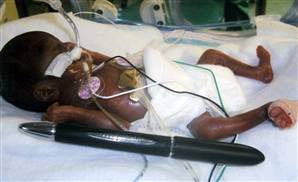
Amillia Sonja Taylor, born Oct. 24 after just under 22 weeks in the womb

She is not ready to go home yet. But she will get there.

22 weeks. That is 5 months and a half for those of you in Rio Linda.

But remember: She wasn’t really a live human being before the doctors moved her out of the womb. This is all a big misunderstanding.

UPDATE: She actually went home today.

Tuesday, February 20, 2007

The classic cycle of gun control

Gun laws that constrain the law-abiding

"Gun crime has doubled since they were introduced. Young hoodlums are able to acquire handguns - either replica weapons that have been converted, or imports from eastern Europe - with ease. With no dedicated frontier police, our borders remain hopelessly porous. The only people currently incommoded by the firearms laws are legitimate holders of shotgun licences, who are subjected to the most onerous police checks.

...

But more is required. In particular, the ludicrous inhibitions placed on the police when it comes to exercising powers of stop and search have to be lifted. So must the post-Macpherson burden of political correctness, which makes any police officer think twice before challenging a young black man on the street. There is a wider failure here."


(via Proverbial)

Monday, February 19, 2007

"The 1/2 Hour News Hour"


President Rush


Baracamania

Saturday, February 17, 2007

The classic cycle of socialism

Chávez Threatens to Jail Price Control Violators (assinantes UOL: Chávez ameaça prender quem violar controle de preços).

How many times has the world seen this?

How can there be people who still believe this kind of stuff will somehow work?

The only question here is whether Venezuela will follow the hard line path (of the USSR, Cuba and tutti quanti) and start using violence to “make the system work”, or if it will take the more soft approach and slowly crumble like Brazil and so many others.

I’d bet on the former.

Friday, February 16, 2007

Everything that goes around comes around

"There are numbers that help put Warren Buffett's remarkable $43.6 billion charitable pledge of 2006 in perspective:
- It's close to the GDP of Slovakia.
- It's about the market value of McDonald's.

And one comparative figure is especially relevant as we present our annual list of the top donors in the United States: Buffett's boffo moment nearly equals the total donations recorded in the Slate 60 for the previous six years combined—$44.9 billion."


See The 2006 Slate 60 - The 60 largest American charitable contributions of the last year.

Also, check out this Bill Gates interview with Charlie Rose.

Goddamn capitalists.

It’s never enough

So it looks like Bush got what everyone believed was impossible: A deal to shut down North Korea's nuclear reactor in return for aid.

Bush’s point was always that a deal could be reached but it would be through the six-party talks and not by a 1:1 US-North Korea negotiation. He also believed that by taking a hard line and cutting aid, Pyongyang would eventually have no option but to back down.

He was right in both counts.

But for the press (i.e. left) good is never enough. The new thing now is that actually Bush has changed his mind! He never really wanted a deal. All the pressure was just to justify another war. And so on.

These are such blatant lies that if you have the patience and read all articles, even liberal publications (like this Time article) say otherwise.

Another funny thing the press is doing is to try to show that, even though Bush has morphed into this diplomacy champion, conservatives have not. You can even find headlines like this: Conservatives alarmed by North Korea nuclear pact.

Of course conservatives are worried. They were worried when Clinton got the same deal 12 years ago. That doesn’t mean they don’t want a deal. It only shows that they understand that North Korea is still an enemy and you should be alert and try no to repeat your mistakes.

But for the pacifists this deal is the real thing. So why isn’t the press hailing Bush like they did Clinton at that time?

It is very hard for me not to get upset with this kind of bias.

Wednesday, February 14, 2007

More about the "War on the Middle Class"

"The rich are indeed getting richer (the bastards). As Steven Lagerfeld points out in the Winter 2007 issue of The Wilson Quarterly (not yet online), those 130,000 households at the very top of the earnings pyramid have increased their share of pretax wage and salary income from 2 percent in 1973 to just under 7 percent in 2004. Folks in the top 5 percent of households--those making more than $166,000--have seen their inflation-adjusted annual income jack up by a hefty two-thirds since 1970.


But everyone is getting richer. In real dollars, every quintile has posted significant annual increases over the past 35 years, ranging from $3,000 for the lowest quintile to $13,000 for the middle quintile to over $25,000 for next-to-highest one. And the individuals in those quintiles change all the time, something even The New York Times, which wrings its hands on class matters like an obsessive-compulsive, admits. Urban Institute economists Daniel P. McMurrer and Isabel V. Sawhill estimate that between 25 percent to 40 percent of individuals switch quintiles in a given year and that "rates of mobility have not changed over time." Research tracking individuals in the lowest income quintile in 1968 found that 23 years later, 53 percent were in a higher quintile and that half had spent at least a year in the top income quintile.


More important, basic indicators of wealth and opportunity drive home the reality that the middle class' place at the table is pretty secure--maybe not the best seat in the house, but arguably better than ever. A historically high 70 percent of Americans own their homes (see table 956). And two-thirds of high school graduates go on to college (up from half in 1970) [see table 265]. That wouldn't be happening if the U.S. was fast turning into the Brazil of the North.


But don't expect the "vanishing middle class" storyline to itself vanish. Pols and pundits will use scare stories to drum up business and push minimum wage hikes, tax breaks to pay for the wage hikes, prescription drug coverage, and on and on. We in the middle class like the attention (and the more-than-occasional entitlement). More to the point, there are more of us and we've all got more to lose than we used to. Which also means we've got even more to worry about."


More here.

Tuesday, February 13, 2007

Best post of the day

From the Free Exchange:

"BEHAVIOURAL ECONOMICS has been embraced enthusiastically by the left, because it challenges the model of the rational decision-maker. If people systematically make errors in their decisionmaking, then doesn't that open up a need for the government to step in and fix things?

I've never quite understood this argument, of course; where are we getting the human beings who make the decisions for the government? Do they come out of a different pool from the ones who flunk the basic rationality tests posed by the behavioural economics? In fact, as public choice theory shows, government has a whole set of special decision-making problems that can make the normal human mistakes of those decision-makers even worse."

Monday, February 12, 2007

Be afraid

Entrevista da hillary para a ISTOÉ. Money shot:

"ISTOÉ – A sra. foi várias vezes ao Brasil. Caso seja eleita presidente, como será sua relação com esse país?

Hillary – De fato, fui ao Brasil e fiz muitos amigos. Trata-se não apenas de um aliado importante dos EUA, mas também de um parceiro que deve ser consultado mais vezes. Quando eu era primeira-dama, já havia conhecido um pouco dos programas brasileiros para energias alternativas. Desde então, venho citando estes exemplos como coisas que poderiam ser incentivadas e abraçadas pelos americanos. Precisamos formular uma política de aliança e troca de experiências bilaterais neste setor. Há muito mais. Vi programas nas áreas de alimentação, habitação, saúde, preservação, enfim, várias iniciativas brasileiras que devem ser apoiadas pelos EUA e até consideradas medidas de interesse nacional americano."


Oh boy.

Saturday, February 10, 2007

10 Most Economically Literate Members of Congress

Here is the complete article.

6 Republicans and 4 Democrats. Mostly unknowns. No surprises there.

The one thing I could not believe is that old Barney Frank shows up on the list. And they say he is “scary smart”! I mean, the guy is completely crazy, has an incredibly annoying lisp and is one of the most pompous politicians I’ve ever heard.

The funny part is that he claims to believe in “free-market principles, checked with protections”. “Capitalism plus”, as he calls it. Yeah right.

Now, if you want to have a good laugh watch this:


For those who don’t understand why the Republicans are asking about an exemption for American Samoa, here is a quick summary:

The new Democrat controlled congress allowed an exemption to the new minimum wage bill for the pacific Island of American Samoa. So while every other company in any part of the US will be required to pay at least $7.25 an hour, American Samoan companies will be free to pay whatever they want. The average wage for workers in American Samoa is $3.60 an hour.

Why is that?

Well, maybe the answer is StarKist Tuna, which owns one of the two packing plants that together employ more than 5,000 Samoans, or nearly 75 percent of the island's work force. StarKist's parent company, Del Monte Corp., has headquarters in San Francisco, which is represented by Mrs. Pelosi. More interesting than that, there is some controversy around whether Pelosi’s husband owns $17 million in Del Monte stock.

Call me biased, but there's something fishy going on here.

Thursday, February 08, 2007

Bring on the warmth


Maybe it won't be so bad

Interesting how this latest UN report about global warming changed the way some people see the problem. Check out this article from Newsweek:

"Don't be fooled. The dirty secret about global warming is this: We have no solution.
...
Considering this reality, you should treat the pious exhortations to "do something" with skepticism, disbelief or contempt. These pronouncements are (take your pick) naive, self-interested, misinformed, stupid or dishonest. Politicians mainly want to be seen as reducing global warming. Companies want to polish their images and exploit markets created by new environmental regulations. As for editorialists and pundits, there's no explanation except superficiality or herd behavior.
...
Since 1850, global temperatures have increased almost 1 degree Celsius. Sea level has risen about seven inches, though the connection is unclear. So far, global warming has been a change, not a calamity. The IPCC projects wide ranges for the next century: temperature increases from 1.1 degrees Celsius to 6.4 degrees; sea level rises from seven inches to almost two feet. People might easily adapt; or there might be costly disruptions (say, frequent flooding of coastal cities resulting from melting polar ice caps).
...
What we really need is a more urgent program of research and development, focusing on nuclear power, electric batteries, alternative fuels and the capture of carbon dioxide. Naturally, there's no guarantee that socially acceptable and cost-competitive technologies will result. But without them, global warming is more or less on automatic pilot. Only new technologies would enable countries—rich and poor—to reconcile the immediate imperative of economic growth with the potential hazards of climate change.”


Wow. That’s Newsweek(!) basically saying what many skeptics (like yours truly) said all along: We don’t know enough, there is no way to pay for cutting huge levels of CO2, and our best bet must be around new technologies.

Now, there is another side of the debate which is not even being considered yet: the fact that if global temperature rises mildly, let’s say on the low end of current projections, we might be actually better off! There will be a lot of new land to be used for agriculture, less spending on heating, and so on.

I agree that this is all speculation at this point but so is all the end of the world scenarios that will give Al Gore the Nobel Prize.

Monday, February 05, 2007

Yes, we have populists too

First, the facts:
Ford Motors hit by record $12.7 billion loss in 2006.
Exxon Mobil Posts U.S. Record Annual Profit - $39.5 Billion

---x---

Anyone who lives in the US can tell you why Ford is losing money: Because cars from other companies are better. It is that simple, and since Honda and Toyota have now several plants in the US that “unfair competition” excuse used in the 80s is kind of fading out.

How about Exxon? Do people really understand why they are making that much money? I don’t think so. Most important, people don’t understand who gets that profit.

I couldn’t find the numbers for 2006, but for 2005 (when profits were 36 billion)Exxon Mobil paid $7.2 billion in dividends to shareholders, and $18.2 billion in stock buybacks. Besides that, Exxon Mobile employs more than 100 thousand people.

It is also true that Exxon’s executives get a lot of money (Lee Raymond got a $400 million pay off) but to think that 39 billion just went into the pockets of a few fat cats is really a fantasy. Exxon is a public company and its stock is part of a lot of retirement funds.

---x---

You would think that Americans are actually be happy that a local company is at least making money in the energy business, since most of the oil revenues end up in the hands of some anti-American dictator anyway.

You would also think that if the government had anything to say about these two companies, Ford would be the focus. After all, isn’t it the government's job to help people in trouble?

Ah, not exactly.

Here is what Hillary said a few days ago:

"I want to take those profits and put them into an alternative energy fund that will begin to fund alternative smart energy alternatives that will actually begin to move us toward the direction of independence."

What better way to improve our energy situation than take all incentives from energy companies right?

By the way: Exxon’s exploration and capital expenses for 2006 were $177 billion, an increase of $2.8 billion over the 2004 total. The company also projects it will average about $20 billion in capital expenditures through 2010, and has some 60 projects lined up during that time.

That's a lot more than the 39 billion Hillary wants to steal.

---x---

Here is the last piece of information:

US Budget to Reach $2.9 Trillion.

That is almost 79 times Exxon’s profit, and of course, it is at the end dependent on the big chunk of revenue coming from the taxes on all those oil profits.

Man, I really hate these little games people play.

Friday, February 02, 2007

How about that empire eh?


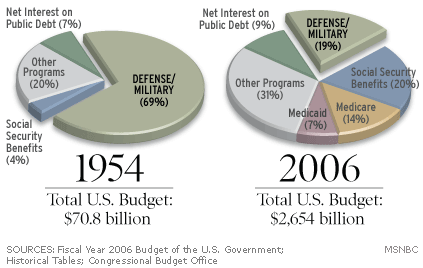
Nearly 70 percent of all federal expenditures in 1954 went to buy rockets, rifles, radar, and nuclear warheads and to pay the salaries of Americans in uniform.

If you measure it another way, military spending in 1954 accounted for 13 percent of the total U.S. economic output (gross domestic product, or GDP).

Today it accounts for about four percent of GDP, a decline of 70 percent since 1954.

In 1954, 3.3 million Americans were serving on active duty in the military. That compares to 1.4 million on active duty today, a 57 percent decline in personnel since 1954.

A telling silence

Até a pinky imprensa brasileira admite que Chávez esta matando a democracia na Venezuela. O tom desses artigos é um tanto "pacífico" but hey, beggars can't be choosers.

Agora, aonde está a revolta do povo? Procuro algum sinal de preocupação nos blogs daqueles com "consciência social" e não acho nada. Procuro uma manifestação de rua, de estudantes brazucas a bleeding heart democrats, e não vejo ninguém...

Now can you imagine what would be happening if we had a socialist democracy being turned into a capitalistic dictatorship? Can you imagine the editorials, the first page headlines, the UN outrage, and most of all, the huge rallies full of celebrities and politicians from many different countries?

Democracy is just a tool for socialists. It is easy to forget the many lessons taught by the great USSR experiment.

Honestly, I don’t understand how capitalism has survived this far.

Wednesday, January 31, 2007

What We Don't Know

42 of the biggest questions in science.

My favorites:
- Where did life come from?
- What is the universe made of?
- What causes gravity?
- Why can’t we predict the weather?
- Why do we sleep?

And here is the most interesting fact of all:
"Information is expanding 10 times faster than any product on this planet - manufactured or natural. According to Hal Varian, an economist at UC Berkeley and a consultant to Google, worldwide information is increasing at 66 percent per year - approaching the rate of Moore’s law - while the most prolific manufactured stuff - paper, let’s say, or steel - averages only as much as 7 percent annually. By this rough metric, knowledge is growing exponentially. Indeed, the current pace of discovery is accelerating so rapidly that it seems as if we’re headed for that rapture of enlightenment known as the Singularity."

Monday, January 29, 2007

The recipe for success

Remeber the iPod and Xbox discussion?

So according to this, here is a breakdown of taxes and tariffs:
“O Imposto de Importação, o IPI, 17% a 19% de ICMS, 9,25% de PIS/Cofins, CPMF, IRCS sobre o lucro, todos somados representam facilmente a metade, ou até mais, do valor final do produto (iPod).”
...
"Segundo um levantamento da Associação Brasileira das Desenvolvedoras de Jogos Eletrônicos (Abragames), antes de chegar às lojas, os videogames carregam mais de 100% somente em tributação direta - 30% de Imposto de Importação, 50% de Imposto sobre Produtos Industrializados (IPI), 9,25% de PIS/Cofins e de 17% a 19% de Imposto sobre a Circulação de Mercadorias e Serviços (ICMS)."

So we know two things:
- Import tariffs are extremely high
- Other taxes over any manufactured products are even higher

It's the perfect recipe for success.

Friday, January 26, 2007

Getting warmer

Why 10 major companies are calling for a national limit on carbon dioxide emissions?

For money, of course.

By the way, any article that starts with "There was a time when the financial press understood that companies exist to make money" deserves to be read.

125 Mil anos em 100. Or not.

Check this out:

Mares poderão subir por mais mil anos

Interesting things you learn(kind of) from this:

- O relatório projeta um aumento de temperatura entre 2C a 4,5C a mais do que os níveis registrados antes da Era Pré-Industrial. (Percebam bem a linguagem) A estimativa mais certeira fala em um aumento médio de 3C, assumindo que níveis de dióxido de carbono se estabilizem 45% acima da taxa atual. Essa estimativa é mais precisa do que a anterior, divulgada em 2001. O último intervalo oficial começava em 1,4C e terminava em 5,8C.(Talk about interval of confidence)

- Teremos mais secas e chuvas (?)

- A elevação do mar ficará entre 28 cm e 43 cm. No relatório anterior do IPCC, de 2001, as alterações apontadas eram de 9 cm a 88 cm. (Talk about interval of confidence)

- Durante o século 20, o aumento do nível médio do mar ficou em 17 cm. (E pelo que eu saiba durante grande parte desse período as temperaturas caíram, certo?)

- O relatório afirma que é "muito provável" (até 90% de chance) que as atividades humanas, lideradas pela queima de combustível fóssil, estejam fazendo a atmosfera esquentar desde meados do século 20. O relatório de 2001 dizia que essa ligação era "provável" (66% de chances ou mais). (Percebam como ninguém tenta nem mesmo estimar quanto a atividade humana realmente aumentou a temperatura).

- Estabilizar os níveis de dióxido de carbono poderá aumentar as temperaturas futuras em 0,5C, principalmente entre 2100 e 2200. Em 2300, isso elevaria o nível do mar de 30 cm a 80 cm em relação a hoje. Depois disso, então, ambas as taxas começarão a cair. (HOW IN THE WORLD CAN THEY CALCULATE THAT?)

- O nível do mar já esteve de 4 m a 6 m mais alto quando as temperaturas estavam 3C mais quentes, há 125 mil anos. (Para onde foi todo o dióxido de carbono que causou esse aumento? Hmm...)

Tuesday, January 23, 2007

The real cost of global warming

Ok, let’s assume Al Gore and the global warming people are 100% correct. That is, man is messing up the planet and the only way to avoid the rise in temperature is to cut off significantly carbon emissions.

What does that really means? Wearing a sweater? Riding a bike to work?

Not quite.

According to David Morris, a co-founder and vice president of the Institute for Local Self Reliance in Minneapolis, Minnesota and director of its New Rules project, here is the real price the world would have to pay:

“The implications of biospheric equity are so profound and so disturbing, that it is understandable why American environmentalists shy away from discussing the issue. Currently, global carbon emissions are about 7 billion tons, roughly, 1 ton per person. But the average American generates, directly and indirectly, some 10 tons per capita. Thus, to save the planet and cleanse our resource sins, Americans must go far beyond freezing greenhouse gas emissions. As a nation, we must reduce them by more than 90 percent, taking into account the sharp reductions in existing global emissions necessary to stabilize the world's climate.

Suddenly we realize that addressing the global warming problem will be very difficult, not only politically but economically and institutionally. And it may well entail significant sacrifice.


Although none of the reductions will be easily achieved, Monbiot's analysis concludes that those related to transportation may be the hardest of all. To reduce ground transportation emissions sufficiently, he suggests the need to severely lessen individual shopping trips. To accomplish this, he proposes that goods be delivered. He cites a UK Department of Transportation study that notes, "a number of modeling exercises and other surveys suggest that the substitution of private cars by delivery vehicles could reduce traffic by 70 percent or more." Every van the stores dispatch, in other words, takes three cars off the road. Monbiot also proposes to transform out of town superstores into warehouses, to be visited only by vehicles that pick up supplies. That will save even more energy, because warehouses use only 35 percent as much heat and 29 percent as much electricity as do stores.


In only one sector does Monbiot fail to identify a technical solution at any cost: air travel. Flying generates about the same volume of greenhouse gases per passenger mile as a car. But, of course, flights are many miles longer than drives. Fly from New York to California and back and you will generate as much greenhouse gas emissions as you will by driving your Prius all year.

Monbiot reluctantly concludes, "(T)here is simply no way of tackling this issue other than reducing the number, length and speed of the journeys we make." Knowing the audience for whom the book is intended, he acerbically adds, this will mean the end of "shopping trips to New York, political meetings in Porto Alegre, long distance vacations."He urges his readers "to remember that these privations affect a tiny proportion of the world's people. The reason they seem so harsh is that this tiny proportion almost certainly includes you."


Ok, so no more driving to a supermarket, no more traveling by plane, and so on.

Can you just imagine the consequence of these measures in the real world? I mean, to implement this would make the crash of 29 look like pocket change.

That is why nobody talks about the price.

And of course the most affected would be “the rich”. But let’s not forget that it is “the rich” who produces the large majority of goods, including machinery, medicine, communication, etc. If push comes to shove, I have no doubt that the poor countries would be affected economically in catastrophic ways.

There is no way, politically or economically that this can be done. Period. We have to find another way.

Monday, January 22, 2007

The solution to brazilian crime - Da série "Template thoughts"

Servir a Polícia deveria ser obrigatório no Brasil. Assim, todos esses blogueiros brasileiros que escrevem posts revoltados sentados em seus escritórios confortáveis teriam a oportunidade de pôr em prática suas idéias a respeito da segurança brasileira ao invés de delegar o trabalho duro aos oprimidos policias (afinal só pobres ignorantes aceitam ser parte da policia no Brasil).

Não seria ótimo??

Saturday, January 20, 2007

Losing the Global race – Mercantilist style


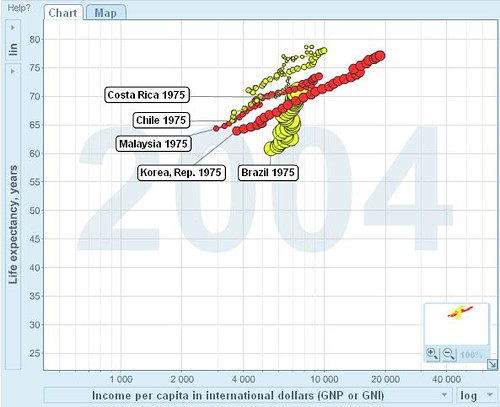
Using Google Gapminder

The graph above shows that in 1975 these countries had the following income per capita / life expectancy:

Costa RicaUS$5.79070y
BrazilUS$5.50261y
South KoreaUS$3.72264y
ChileUS$3.54266y
MalaysiaUS$2.95464y


Now moving to 2004, the numbers were:

South KoreaUS$18.840(406%)77y(+13y)
ChileUS$9.993(182%)78y(+12y)
MalaysiaUS$9.444(219%)73y(+9y)
Costa RicaUS$8.714(50%)79y(+9y)
BrazilUS$7.531(36%)71y(+10y)


---x---

Some didn’t like my previous posts about how imports are so expensive in Brazil when compared to the rest of the world. Same old.

I even know what they will say about the data above:
“Ah, but these countries were protectionists too! They had big government programs that helped their industries! Asian countries are financing the US debt! Chile had a dictator! Why do people need an iPod anyway? This is really unfair!”

Like every fallacy, this kind of thought has some truth in it. Yes, every single country in the world has some level of protectionism. Yes, some of these countries (Korea and Malaysia especially) had big government programs that subsidized some industries.

SO DID BRAZIL!

Why their programs succeeded and ours failed is an interesting historic discussion. But in my mind, the real important question is why these countries are still growing NOW and we are not.

---x---

The mercantilists thought that the wealth of a country was defined by the amount of gold they held. If you ran a trade deficit, your country was getting poorer. It was that simple.

Capitalism on the other hand, is all about specialization. You import things other countries produce for a cheaper price so you can produce other things and export those at a cheaper price. Not so simple, but it does work.

The only explanation I find to these protectionists policies that still linger in Brazil is that the government still works under the mercantilist paradigm: exports are good, imports are evil.

After all, what industry is Brazil protecting by making an iPod cost so much?

---x---

Back to the iPod index, here is the price for the countries I mentioned above:

BrazilUS$ 327.71
Costa RicaUS$ 251.00
ChileUS$ 210.92
MalaysiaUS$ 199.62
South KoreaUS$ 176,17


Is it just coincidence?

Friday, January 19, 2007

iPod index e o custo Brasil

O australiano Commonwealth Bank, inspirado no Big Mac index do The Economist, criou o iPod index baseado no preço do iPod Nano de 2 GB pelo mundo.

Ganha um iPod quem adivinhar qual é o lugar mais caro do mundo: (custo médio em dólares)

1. Brasil 327,71
2. Índia 222,27
3. Suécia 213,03
4. Dinamarca 208,25
5. Bélgica 205,81
6. França 205,80
7. Finlândia 205,80
8. Irlanda 205,79
9. Reino Unido 195,04
10. Áustria 192,86
11. Holanda 192,86
12. Espanha 192,86
13. Itália 192,86
14. Alemanha 192,46
15. China 179,84
16. Coréia do Sul 176,17
17. Suíça 175,59
18. Nova Zelândia 172,53
19. Austrália 172,36
20. Taiwan 164,88
21. Cingapura 161,25
22. México 154,46
23. EUA 149,00
24. Japão 147,63
25. Hong Kong 147,35
26. Canadá 144,20

Mais aqui

Tuesday, January 16, 2007

Sunday, January 14, 2007

A few more things about Iraq

This is the kind of stuff that the press pretty much ignores:

- Remember the threats that Saddam’s death would create even more chaos? Well, the first two weeks of January have been the less deadly to American troops since March 06 (which was the less deadly month since September 03).
- Even after Italy, Spain and many others have left there are still around 16 thousand troops from 25 countries in Iraq right now.
- The "surge" Bush talks about is not only made of American troops. More Iraqi troops will be sent to Baghdad including a 3 thousand brigade specialized in urban combat led by a Kurdish general.

Saturday, January 13, 2007

Iraq 2007

I think one of the things you learn as you get older is that criticizing just for the sake of it is too easy. And like everything else that is too easy, it adds very little value.

I understand people who are against the war in Iraq. I even understand people who are against all wars. What I don’t understand (and much less respect) is that people take these positions and don’t acknowledge their consequences.

When was the last time you heard pacifists taking responsibility for the 1 million plus South Vietnamese and Cambodians that died after the US withdrawal from the Vietnam War?

What to think about people who were in favor of the Kosovo war and cry about Darfur but say that the US had no business invading Iraq?

I really wish we could just get all these people out of the equation as stupid hypocrites and continue the conversation about war, peace and whatever is in between.

Right now in Iraq, the US has one objective: to establish a somewhat stable government that is not a safe haven for terrorists. Nothing more, nothing less.

Is it possible? I’m not sure. Is it a valid objective? I am sure it is.

Now, why is Iraq still in chaos? Did Bush make mistakes? Yes. Are the Iraqis partly responsible for all the stupid nonsense violence as well? You bet. Is Iran, Syria, Saudi Arabia, etc, part of the problem? No doubt about it.

Is Bush’s plan of “surging” Baghdad risky? Yes.

Does anyone else have any other plan to actually get to the goal of establishing a stable government in Iraq? No.

Even considering all the obvious differences, there is a chance that the Iraq war may end up being like the Vietnam war: a "conflict of choice" that brought nothing but despair to the US and to the host country.

However, there is also a chance that this war becomes another Korean War: a not so clear cut victory that in the long term worked well for the US and to the whole region around the conflict.

Time will tell.

Thursday, January 11, 2007

Where are all the kids?


Second snow storm of the season in Seattle

Conversation this morning between Al Gore and his son at the playground:

Son: But where are all the kids Dad?
Al Gore: They didn't behave well and global warming took them away Son.

"The Speech"

"We have so many people who can't see a fat man standing beside a thin one without coming to the conclusion the fat man got that way by taking advantage of the thin one. So they're going to solve all the problems of human misery through government and government planning. Well, now, if government planning and welfare had the answer, and they've had almost 30 years of it, shouldn't we expect government to read the score to us once in a while? Shouldn't they be telling us about the decline each year in the number of people needing help? The reduction in the need for public housing?

But the reverse is true. Each year the need grows greater; the program grows greater. We were told four years ago that 17 million people went to bed hungry each night. Well that was probably true. They were all on a diet. But now we're told that 9.3 million families in this country are poverty-stricken on the basis of earning less than 3,000 dollars a year. Welfare spending 10 times greater than in the dark depths of the Depression. We're spending 45 billion dollars on welfare. Now do a little arithmetic, and you'll find that if we divided the 45 billion dollars up equally among those 9 million poor families, we'd be able to give each family 4,600 dollars a year. And this added to their present income should eliminate poverty. Direct aid to the poor, however, is only running only about 600 dollars per family. It would seem that someplace there must be some overhead."


Too bad he is not around anymore...

More here.

Hey jealousy

This article from the “Naked Economist” mentions a study showing that people would prefer to earn 100k while everybody else earned 85k instead of making 110k while everybody else makes 200k.

Now, I don’t know whether the study is for real or serious, but assuming it is, what should we make of that?

Is this something we should seriously respect and consequently apply to our economic policy?

It is interesting to consider that this study doesn’t really show that people value equality. They value being on the top. I would bet big time that the same people that preferred a smaller income just to be on top would prefer a large income difference instead of a small one as long as they were the ones on the positive side.

But what if a study really showed that people prefer a “smaller pie” as long as there is more equality. Should we consider that really a final proof that income inequality is the devil and socialism is the only way?

For me that would be the same as considering rape something legal nowadays just because our ancestors did so.

It is undeniable that a “bigger pie” means more money for hospitals, schools, research, infrastructure, etc. That is, a bigger pie will make the society as a whole to be more advanced.

So should we sacrifice society just because we have this instinct of equality? Aren’t we supposed to be a rational race?

Should we let envy dictate our economic policy?

Monday, January 08, 2007

Enquanto isso na matriz...


We learn from history that we learn nothing from history.

Quantas pernas tem um comuna?

Chávez pede poder especial e amplia nacionalização

Conheço um pessoalzinho muito bobinho que, na época da nacionalização do petróleo na Venezuela, dizia que o Chapolin não era comunista. "Comunista não existe mais! Você está vivendo no passado!", me diziam.

Tudo isso me lembra uma piada bobinha, acho que do Abraham Lincoln. Mais ou menos assim:
How many legs does a dog have if you call the tail a leg?
Four; calling a tail a leg doesn't make it a leg.


That's about it. Acorda Brasil.

Thursday, January 04, 2007

Some data about the US Congress

- 131 members have served in the military, 102 in the House and 29 in the Senate (2006).

- There are 90 women, 42 blacks, 27 Hispanics, seven Asians and one Native American in the 110th Congress.

- The current salary for rank-and-file members of the House and Senate is $165,200 per year.

- Religious composition (2006):
• Catholic: 24.5%
• Baptist: 16.3
• Methodist: 6.8
• Lutheran: 4.6
• Presbyterian: 2.7
• Pentecostal/Charismatic: 2.1
• Mormon: 1.3
• Jewish: 1.3
• Muslim: 0.5
• Buddhist: 0.5
• No religion specified: 14.1
• Refused: 5.4
• Other: 19.9

- The average minimum net worth of members of the House of Representatives is $2.4 million, with a median net worth of $385,000; in the Senate, $8.9 million and a median of $1.1 million. At least 35% of members of Congress are millionaires. (2005 data)

- The richest member of congress is Sen. John Kerry (D-Mass.) with a net worth of $750 million (2005). Kerry was No. 391 on 2004's Forbes list. Here are the top 5:
2. Sen. Herb Kohl (D-Wis.)
3. Sen. Jay Rockefeller (D-W.Va.)
4. Rep. Jane Harman (D-Calif.)
5. Rep. Darrell Issa (R-Calif.)


Sources:
Washington PostP
Detroit Free Press
Us Gov Info
OpenSecrets.org
The 50 richest members of congress

Tuesday, January 02, 2007

More Optimistic Prognoses

Here.

A lot of great ideas. I am particularly optimistic about infrared solar power. The technology to make this possible was actually discovered last year by scientists and I have already seen some reports of companies investing on it.

Can you imagine how huge this will be?

Saturday, December 30, 2006

2006

We are taught to be pessimists. Optimists are supposed to be fools who live in bubbles and are just not aware of other people’s suffering. After all, the news will show you tragedies daily. The movies will remind you that rich people are all crooks. Teachers will preach to you that it is all about who you know. Pundits will predict our doom.

Still, another year goes by and we persevere. There are fewer, less bloody wars. Less people die from all kinds of disease. We have a global economy that is more prosper, more stable and more accessible to more and more countries. A lot more people are getting fat rather than dying of hunger.

It is the constant predicament of our evolution. Regardless of all our faults, we continue to build a better world.

---x---

Being an optimist is believing things will get better, while understanding that nothing is perfect.

This year I had the chance of knowing and working with a lot of very, very smart people from various backgrounds. They’re still not perfect, and actually some of them are pretty difficult to deal with. But still, they showed me how much potential human beings have and how much can be accomplished with our minds and hard work. It is like peeking through a little window into a no-nonsense future where people are productive and help each other by doing their personal best.

It is one of the most uplifting experiences I’ve ever had.

---x---

Maybe this is all a delusion based on anecdotal evidence and all that has happened to me so far is pure luck.

However… I didn’t come from a rich or powerful family. I didn’t know highly influential people who gave me a helping hand. I did not get great grades and was not the stronger or more handsome kid in my class. Still, I’ve got a good life. I’ve got a great family.

Give it your best. Things do get better. Have a great 2007.

Saddam's execution

I am not opposed to the death penalty. I think that for some criminals, like serial child molesters, the risk (no matter how slim) of having them escaping and committing more crime is just unacceptable.

However, my first reaction to Saddam’s execution was that I would not have done it. The risk of Saddam escaping and getting back to power was just non-existent. Besides that, I think it could send a message that one brutal regime is being replaced by another brutal regime.

But yesterday I was listening to NPR and at some point they were interviewing an Iraqi translator. The reporter asked the translator what the people on the streets were thinking regarding Saddam’s execution. His answer was surprising to say the least. He said that nobody really believed that Saddam would be executed because “he was America’s man” and that he was actually commanding the insurgents from jail with US’s approval.

So maybe executing him was the right decision. Maybe we are still having all this violence in Iraq because the new group in power is not demonstrating enough authority. Maybe authority for the common Iraqi is directly related to strength and violence.

I guess time will tell.

Friday, December 29, 2006

Infoquake

Check this out: David Louis Edelman has listed my brief comment about Infoquake in his Critical praise and reviews page. Now that is really cool!

I really wish that Infoquake turns out to be a big success. Not only because I am curious about the two sequels but because I think this “business world of the future” theme is one of the least explored fields of SF and one that has great potential.

So if you have 10 bucks to spend on a book go ahead and get a copy of Infoquake. It’s well worth it.

Wednesday, December 27, 2006

The middle-class

Here is another article that shows the odd disparity between what people think about the overall economy and their own financial situation:

"...
- Although only 32 percent rate the overall economy as "excellent" or "good," 52 percent judge their personal situation as excellent or good (35 percent said "fair" and 13 percent "poor").

- Most Americans (60 to 37 percent) think their own living standards are rising; parents of children under 18 overwhelmingly (54 to 24 percent) think the same will be true for their children.

- Almost 70 percent of Americans say they've attained or will attain the "American Dream," as they define it. More than half say success comes from a good education and hard work, not from connections (18 percent) or being born wealthy (13 percent)."


---x---

One of my "hobbies" is to listen to liberal talk shows. Most of them are garbage but some are quite entertaining. My favorite one is Thom Hartman's.

One of Thom's favorite subjects is the "war on the middle-class" being waged supposedly by Republicans. It took me a while to understand exactly what he was talking about, but I finally got it: For him, the middle-class is not an idea of bringing people out of poverty and into a decent standard of living. No sir. Middle class for Thom is another way to say income equality. If the rich are getting richer, nothing else matters. Not even if the poor are less poor.

That's a smart (and dangerous) liberal right there.

---x---

In the other side of the Atlantic, my french buddies are still not getting it. They keep taxes so high that now one of their rock stars, a guy called Johnny Hallyday, is getting his money out of France.

Now, that is one way (probably the only non-violent one) to get income equality.

Tuesday, December 26, 2006

Government waste

Abuse could push Katrina costs to $2 billion

It’s amusing how the liberal media just can’t link government's waste with the ineptitude of government itself. It might be just Bush bashing mania acting up again but I doubt it.

I wonder how they would report such news if we had a democrat president.... Maybe they would just not report it at all?

Thursday, December 21, 2006

Multiculturalism + Eugenics

‘Designer’ babies with made-to-order defects?

Well, it makes total sense doesn't it?

If nothing is right or wrong, nobody is better than anyone, and the bottom line is just that "we are all different", why not design your babies to be like you even if you are a dwarf?

UPDATE:
God damn you, motherfuckers

Embrace the Trade Deficit (or why globalization works)

Since the 2001 recession, the U.S. economy has created 9.3 million new jobs, compared with 360,000 in Japan and 1.1 million in the euro zone excluding Spain. This despite our trade deficit and their trade surpluses. Like the U.S., Spain (3.6 million new jobs) and the U.K. (1.3 million new jobs) ran trade deficits and created jobs rapidly in this five-year period. Wages are rising solidly in these three. The economics is clear (for once) that a liberal trading environment allows more jobs with higher wages as people specialize.

More here.

Books 2006

Good books I've read this year:

The Wisdom of Crowds
Very good. I got it because I didn't quite believe the idea, but it makes a good case for collective wisdom.

America: The Last Best Hope (Volume I):
From the Age of Discovery to a World at War

Great history book. Easy to read and full of little unknowns facts.

Rendezvous with Rama
Classic. I've read it when I was younger but wanted to check the english version.

Anthem
Not as good as Fountainhead but still entertaining.

On Classical Economics
Probably too technical for non-economists. But still interesting.

Childhood's End
Kind of bizarre… but still as good as any Clarke's.

The Time Traveler's Wife
Loved all of it, except the end.

Infoquake (The Jump 225 Trilogy)
Probably the coolest SF I've read in the last 5 years.

The Economics of Life
A little outdated but still worth it.

The Bear and the Dragon
I have not finished it yet, but so far I like it.

How about you all? Any good books to recommend?

Tuesday, December 19, 2006

A good lesson

So, we’ve been hit by a huge windstorm Thursday night. On Friday there were a total of 1.5 million homes and businesses without power. Wind gusted to 113 mph near Mount Rainier and to a record 69 mph at Seattle-Tacoma International Airport. So far 14 deaths are blamed on the storm.

We were without power for 4 days. During the night it got really cold inside the house since outside temperatures were in the middle 20s (around -4 C). There were no gas stations open. My car’s tank was less than ¼ full, so I could not go very far. All traffic lights were not working, so it took a long time to drive anywhere. On Friday, my phone line stopped working. Cell phones did not work at all, and the batteries were all out on Saturday in any case.

There were no warnings on Thursday from the weather services. Just the usual stuff about a “storm”, the kind of warning you get twice every month. There were no extra police on the streets. No government vans looking for people that were freezing inside their houses or for old people who starved after the food in the fridge went bad.

I live in King County, one of the richest counties in the country. The State Government just reported an operational surplus of 1.4 Billion dollars.

Virtually all parts of government here are democrat. From the city counsel to the mayor to the governor and senators, everybody is a blue "for the people" Dem.

Still, if you analyze what has happened here you will conclude that this was a pretty much like Katrina. The only real difference was that the winds here were a little weaker and there were no levies to break. That’s it.

Now, you won’t see the newspapers talking about all of this. After all, only 14 people died. Also, and most important, King county is mostly white and rich. Government doesn’t need to help these people, right?

However, government guarantees that it is here to help. They surely eat some nice chunk of people’s income. They build big agencies and say that the reason the county is rich is exactly because the government is so strong.

The truth is that the government didn’t help because it couldn’t. First of all, it can’t even predict these things. Second, it doesn’t scale. The daily needs of a citizen are so much smaller than the needs of that same citizen during a crisis that is simply impossible to keep an infrastructure capable of helping everybody (or something close to the majority) during such times.

What happened in New Orleans should have been a warning. Not about the incompetency and slowness of government (which are inherent and should be expected) but about this crazy notion that people could actually bet their own lives on their government!

This may sound obvious to many but is not what the press and the government wants you to think. I believe, honest to god, that this is a very important point. It is CRUCIAL that people understand that they need to depend only on themselves. The biggest the disaster, the clearer this should be.

Tuesday, December 12, 2006

Evil draws (some) men together

List of distinguished representatives talking today at the iranian conference questioning the Holocaust:

Mahmoud Ahmadinejad
David Duke
Robert Faurisson
Ali Akbar Mohtashamipour
Wolfgang Froehlich
Michele Renouf
Fredrick Toben

And many more. A good reminder of what evil really means. The same evil that ‘peace seekers’ wants us to negotiate with.

"The evil of the world is made possible by nothing but the sanction you give it."
Ayn Rand

Sunday, December 10, 2006

David Deutsch

David Deutsch talks about the universe, life and… global warming.

Deutsch's theory of “cosmic knowledge” makes all the sense to me. We should understand what makes us different and realize that our only hope to avoid extinction is not “sustainable development”. It is “knowledge for development”.

The example of global warming was a great one. I’ve always thought that this illusion (typical of “progressives”) that we can somehow solve things by limiting economic progress is lunatic. Especially because economic progress is one of the most important enablers of scientific progress.

Why aren’t we looking at solutions that really address the consequences of global warming? Why don’t we recognize that we can’t accurately predict our climate and stop wasting our time? Why don't we talk more about possible options instead of making movies only to scare people in the wrong direction?

Maybe the real problem is the mix up of politics and science. Lefties think this is a problem only with the religious right, but in my opinion the real threat is the crazy left. Things like the Kyoto treaty are more related to the idea of bringing countries to similar levels of development than decreasing pollution. The fact that only developed countries were included is a pretty good indicator of that.

Problems are soluble. Problems are inevitable.

Thursday, December 07, 2006

Losing our minds... and our heads

It is obvious that one of Iraq’s problems is the media overexposure that every tragedy that happens there gets.

I am not saying that we shouldn’t care about markets being bombed. I am only saying that the world is pretty nasty in many places, and that the situation in Iraq could get worse. Much, much worse.

One good example (in so many ways) is Somalia. When was the last time you heard bad news about Somalia? Is that because they are a happy peaceful bunch? Not a chance.

Here is an interesting one:

"MOGADISHU, Somalia - Residents of a southern Somalia town who do not pray five times a day will be beheaded, an Islamic courts official said Wednesday, adding the edict will be implemented in three days.

Public places such as shops and tea houses in Bulo Burto, about 124 miles northeast of the capital, Mogadishu, should be closed during prayer time and no one should be on the streets, said Sheik Hussein Barre Rage, the chairman of the town’s Islamic court.

Those who do not follow this edict “will definitely be beheaded according to Islamic law,” Rage told The Associated Press by phone. “As Muslims, we should practice Islam fully, not in part, and that is what our religion enjoins us to do.

He said that the courts are announcing the edict over loudspeakers in the town."


So, bottom line is that even though Bagdad is a mess, most of Iraq is still better than a lot of other places.

That of course, can change in a heartbeat.

Tuesday, December 05, 2006

Government Support for the Arts: A Cautionary Tale

After reading this loony interview with this Maurizio Lazzarato guy, I was left with the following question: What in the world is this "Política do Emprego Cultural"?

Well, I found the answer in this amazing article from 2004. It tells the tale of how the french created this special unemployment program for the "intermittents", the temporary arts workers, and how it quickly became a billion dollar liability and a political nightmare.

It's kind of a long history but it's worth it. It shows just how crazy the "pay for my bills or I'll kill you" French leftist ideology is, and is yet another example of how this pipe dream called social democracy just plain doesn't work.

How 'Integration' Became Discrimination

Great article by James Taranto: "How 'Integration' Became Discrimination"

"The New York Times reports on an important case the Supreme Court heard yesterday:

By the time the Supreme Court finished hearing arguments on Monday on the student-assignment plans that two urban school systems use to maintain racial integration, the only question was how far the court would go in ruling such plans unconstitutional.

There seemed little prospect that either the Louisville, Ky., or Seattle plans would survive the hostile scrutiny of the court's new majority. In each system, students are offered a choice of schools but can be denied admission based on their race if enrolling at a particular school would upset the racial balance.

At its most profound, the debate among the justices was over whether measures designed to maintain or achieve integration should be subjected to the same harsh scrutiny to which Brown v. Board of Education subjected the regime of official segregation. In the view of the conservative majority, the answer was yes.

But liberal justices disagreed:

Justice Ruth Bader Ginsburg tried unsuccessfully to turn the chief justice's colloquy with [Seattle lawyer Michael] Madden in a different direction. The question of whether "using racial integration is the same as segregation," she said, was "pretty far from the kind of headlines that attended the Brown decision."

Bringing "white and black children together on the same school bench," Justice Ginsburg continued, "seems to be worlds apart from saying we'll separate them."

The fundamental dispute is whether antidiscrimination laws--the 14th Amendment and, by implication, the Civil Rights Act of 1964--ban discrimination altogether, or only in the pursuit of invidious ends. Broadly stated, the "conservative" position is that these laws protect individuals from discrimination, whereas the "liberal" position is that discrimination is fine in the pursuit of "diversity" or integration but not of white supremacy.

Liberals, in other words, are much more apt to say that the ends justify the means. As Justice Harry Blackmun wrote in University of California v. Bakke, "In order to get beyond racism, we must first take account of race. . . . And in order to treat some persons equally, we must treat them differently."

That was in 1978. Twenty-five years later, Justice Sandra Day O'Connor, in Grutter v. Bollinger, upheld some racial discrimination in higher education, but wrote that she expects the need for them to have passed in another 25 years. Justice Ginsburg made a point of disagreeing, saying that one may only "hope" that it will be "safe to sunset affirmative action."

There is a curious disconnect here. "Affirmative action" is politically unpopular, having been banned by initiative in three liberal states (California, Michigan and Washington). With Justice Samuel Alito having replaced O'Connor, its legal status is shaky.

In any case, it has always been presented as only a temporary measure--a way, as Justice Blackmun put it, "to get beyond racism." Yet affirmative action's advocates act as if it is here to stay. For them, discrimination is no longer a means to an end but an end in itself. The Seattle Public Schools Web site has a statement on its Web site that expressly disavows the goal of getting beyond racism:

The intended purpose of our work in the area of race and social justice is to bring communities together through open dialogue and honest reflection around what is meant by racism and the impact is has on our society, and more specifically, our students. Our intention is not to put up additional barriers or develop an "us against them" mindset; nor is it to continue to hold onto unsuccessful concepts such as a melting pot or colorblind mentality.

As George Will notes, this statement replaced one that was much worse:

Until June, the school district's Web site declared that "cultural racism'' includes "emphasizing individualism as opposed to a more collective ideology,'' "having a future time orientation'' (planning ahead) and "defining one form of English as standard.'' The site also asserted that only whites can be racists, and disparaged assimilation as the "giving up'' of one's culture.

This is in fact baldly racist. In concept it is distinguishable from white supremacy only in its refusal to condone value judgments. But the real world imposes its own "value judgments," and in practice it seems obviously pernicious to inculcate black children with the idea that because of the color of their skin, they cannot learn to plan ahead or to speak standard English.

Advocates of affirmative action, thus, have abandoned the goal of "getting beyond racism," upon which it was originally imposed on the public. Affirmative action has become a way of perpetuating discrimination rather than overcoming it. It is, at best, an experiment that has failed.
"

Monday, December 04, 2006

Politicians, clowns and the real world

The US State Department says:

"We look forward to having the opportunity to work with the Venezuelan government on issues of mutual interest."

Chavez, el bufón, says:

"It's another defeat for the devil, who tries to dominate the world. Down with imperialism. We need a new world."

Reality shows:

"US Exports to Venezuela were $4,888.4 millions between January and July, 2006, which is more than all the US exports to Venezuela in 2004 and a 140% more than the US exports in the first semester of 2005.

According to a statistical report of US Census, made public yesterday by US Commerce Department in Washington, Venezuela is the 10th US oil supplier in the world, mainly of petrol.

Venezuela also is in the group of the 10 more important commercial associates of US, only after China (the first in the list), Japan, Canada, Germany and Mexico and before France, Brazil and Russia.

These numbers will increase at the end of 2006, because during September, October and November the commercial activity is usually much more important than in the first 6 months of the year, explained Joe Tafchinski, US Commerce Department’s speaker in Washington, who made the statistical analysis.

The balance of trade with USA benefited Venezuela, who obtained a superavit of about $15,000 millions, which at the end of 2006 could increase more than $30,000 millions."

Saturday, December 02, 2006

Journalists being journalists

I am not sure what the problem here is.

I mean, aren’t journalists supposed to get the information they need in any possible way? Even if the source is illegal (i.e. people leaking information that should be confidential)?

Isn’t it true that Journalists are praised even more when the information is really confidential? Some would say that success for any report is directly proportional to the damage it causes.

Therefore, I believe this is all backwards. By cheating in an open book ethics exam, these students are showing that they hold ethics in very high regard.

I'd say A+ for all of them.

Friday, December 01, 2006

Some people never learn...

Brazucas se dando mal na terra do Fidel.

E como sempre, o mais engraçado são os comentários:
"Sempre me emociono ao ler o que vcs escrevem. Me orgulho de ser mãe de Milena e Thiago, amiga de Pedro e Lígia. Ver Cuba pelo olhar de vcs me fez sentir muito próxima deste povo; passei a amá-los pelo que ensinaram a mim e a vcs. Carta Maior está de parabéns por permitir a expressão destes jovens."

Hein?